
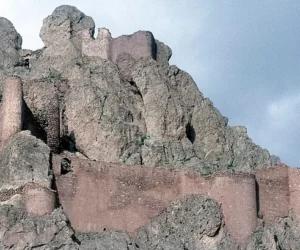
Dogubayazit Castle is an important historical site located in the Dogubayazit district of Ağrı Province, eastern Turkey. This castle offers significant insight into the region’s military and political history, especially its strategic importance during various periods. Historical Background The castle’s origins date back to ancient times, though the precise date of its construction remains uncertain….
Neural Pathways
Neural Pathways is a collective of seasoned experts and researchers with a profound passion for unraveling the enigmas of ancient history and artifacts. With a wealth of combined experience spanning decades, Neural Pathways has established itself as a leading voice in the realm of archaeological exploration and interpretation.
Our team of researchers and scholars provide unparalleled depth of knowledge in deciphering the intricate narratives embedded within ancient artifacts and deciphering the cultural nuances that shaped civilizations of the past. Through meticulous research, rigorous analysis, and a collaborative spirit, Neural Pathways has made and continues to make significant contributions to our understanding of the human past.
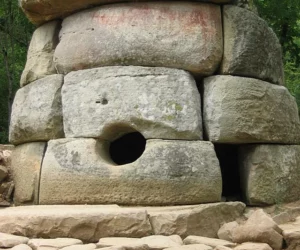
Dolmens of the North Caucasus
Dolmens of the North Caucasus are megalithic tomb structures found primarily in the Western Caucasus region, including areas like Krasnodar Krai, Adygea, and the Republic of Abkhazia. These dolmens date from the late 3rd millennium BC to the early 2nd millennium BC. The exact purpose and construction methods of these ancient monuments continue to be…
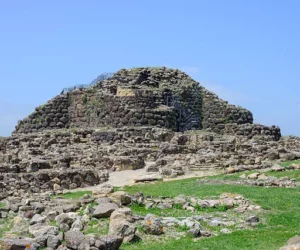
Su Nuraxi (Barumini)
Su Nuraxi, located in Barumini, Sardinia, is one of the most important archaeological sites in the Mediterranean. This prehistoric structure is a Nuragic complex, typical of the ancient Nuragic civilization, which thrived on the island from around 1800 BC to 238 AD. Historical Significance Su Nuraxi is a monumental example of the Nuragic culture, known…
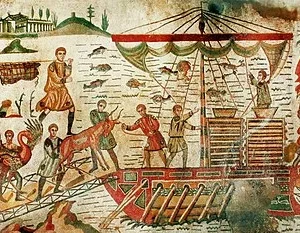
Villa Romana del Casale
The Villa Romana del Casale is an ancient Roman villa located near Piazza Armerina in Sicily, Italy. This site is known for its exceptional collection of mosaics, dating back to the late Roman Empire. Constructed in the 4th century AD, the villa provides invaluable insights into Roman life, culture, and architectural design during this period….
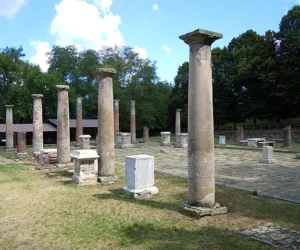
Veleia (Italy)
Veleia, an ancient Roman town in northern Italy, was located in what is now the Emilia-Romagna region. The town’s ruins lie near modern-day Lugagnano Val d’Arda. It gained importance during the Roman Empire and holds archaeological significance today. Its history, structures, and artifacts provide insight into Roman provincial life. Early History The town of Veleia…
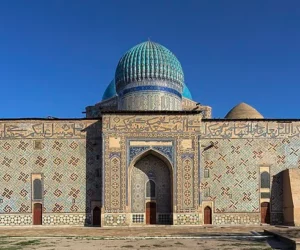
Mausoleum of Khoja Ahmed Yasawi
The Mausoleum of Khoja Ahmed Yasawi is an important historical and architectural site located in present-day Turkistan, Kazakhstan. It was built to honor Khoja Ahmed Yasawi, a Sufi mystic and poet who lived from 1103 AD to 1166 AD. Yasawi’s teachings and influence spread across the Islamic world, and the mausoleum was constructed after his…