Western Han Dynasty
The Western Han Dynasty, spanning from 206 BC to AD 9, marked a golden age in Chinese history, succeeding the turmoil of the Qin Dynasty’s fall. This era was characterized by significant expansion, cultural flourishing, and the establishment of patterns that would define imperial China for centuries. The dynasty was founded by Liu Bang, who emerged victorious in the power struggle following the collapse of the Qin Dynasty, proclaiming himself Emperor Gaozu of Han.
Under the Western Han, China saw a period of relative peace and prosperity, with emperors like Wu Di (reigned 141–87 BC) playing pivotal roles in its expansion and consolidation. The empire extended its borders through military campaigns, pushing into Korea, Vietnam, and Central Asia, thus securing the Silk Road’s trade routes. These conquests not only enlarged the empire’s territory but also facilitated cultural exchanges and the spread of Buddhism into China.
The Han Dynasty is notable for its administrative sophistication. The government was structured around a central bureaucracy, drawing on Confucian principles to guide its ethics and practices. This period saw the civil service examination’s inception, a revolutionary method to select government officials based on merit rather than birthright, although it became more systematically used in later dynasties.
Social and daily life in the Western Han Dynasty was marked by significant advancements. Agriculture flourished with the promotion of iron tools and the introduction of new crops, supporting a growing population. Silk production and the arts thrived, with the era producing enduring literary and historical works, including Sima Qian’s “Records of the Grand Historian.”
Religion during the Western Han was a complex tapestry that included ancestor worship, Confucianism, Taoism, and the introduction of Buddhism towards the dynasty’s end. These beliefs coexisted and influenced each other, shaping the spiritual and moral outlook of the people.
The dynasty’s decline began with internal strife and corruption within the imperial court. The usurpation by Wang Mang in AD 9, who established the short-lived Xin Dynasty, temporarily interrupted the Han lineage. However, the Eastern Han Dynasty would later restore Han rule, continuing its legacy until AD 220.
Wars and battles were pivotal in the Western Han’s expansion and defense. The Han–Xiongnu War, for instance, was a series of military engagements over several decades that ended with the Han Dynasty’s decisive victory, securing the northern borders and ensuring the safety of the Silk Road trade routes.
The Western Han Dynasty’s legacy is profound, laying the foundations for much of Chinese culture, government, and society. Its influence extends far beyond its historical period, resonating through subsequent dynasties and into modern China.
-
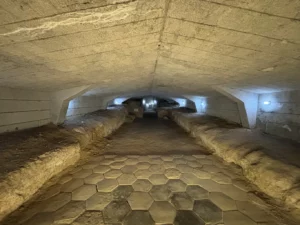
Beidongshan Han Tomb
Discovering the Beidongshan Han Tomb Located in Dongshan Village, Maocun Town, Tongshan District, the Beidongshan Han Tomb stands as a testament to…
-
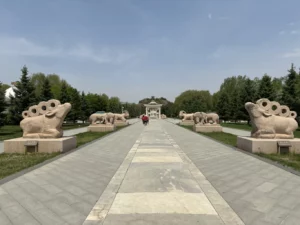 Eastern Han Dynasty, Funerary Structures, Jin Dynasty, Song Dynasty, Sui Dynasty, Tang Dynasty, Tombs, Western Han Dynasty, Western Xia Dynasty, Yuan dynasty
Wang Zhaojun Tomb and the Ethnic Unity of China
The Tomb of Wang Zhaojun: A Symbol of Unity and Friendship The Tomb of Wang Zhaojun, also known as Qingzhong, stands prominently…
-
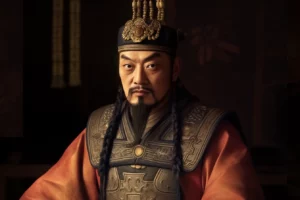
Emperor Hui of Han (Liu Ying)
Early Life and Ascension of Liu Ying Liu Ying, born in 210 BC during the Qin dynasty, was the second son of…
-
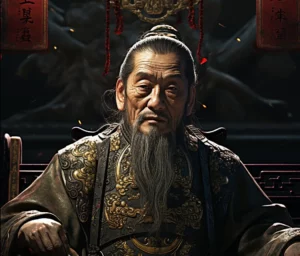
Emperor Ai of Han
Early Life and Ascension of Emperor Ai of Han Emperor Ai of Han, born Liu Xin in 25 BC, ascended the throne…
-
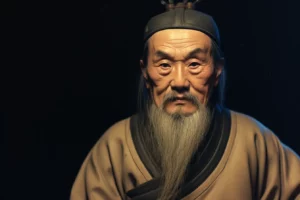
Emperor Yuan of Han
Early Life and Ascension of Emperor Yuan of Han Emperor Yuan of Han, born Liu Shi in 75 BC, came from a…
-
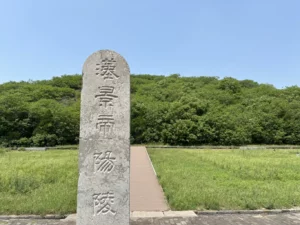
Yangling Mausoleum of Han
Han Yangling Mausoleum, located at the eastern end of the Xianyang Plain, serves as a joint burial site. It houses the tombs…