Teotihuacan civilization
The Teotihuacan civilization was one of ancient America’s most mysterious and influential cultures. It existed from approximately 100 BCE until about 550 CE, in what is now central Mexico. The city of Teotihuacan, for which the civilization is named, was one of the largest in the world at its peak. It is famous for its grandiose architecture, including the Pyramid of the Sun and the Pyramid of the Moon. These structures are aligned with celestial bodies, revealing the Teotihuacans’ advanced understanding of astronomy. The Teotihuacan civilization was a complex society with a well-organized urban plan, featuring broad streets and residential compounds.
During the Teotihuacan civilization timeline, the society developed an economy based on agriculture and trade that extended across Mesoamerica. This enabled them to exert influence over a wide area, spreading their cultural practices and religious beliefs. The Teotihuacans are known for their beautiful murals and other art that adorned their city, including intricate masks and statues. Although much has been lost about their language and writing system, the artifacts and ruins left behind tell the tale of a civilization deeply invested in religion, trade, and the arts. After reaching its height around 450 CE, Teotihuacan experienced a period of decline, and by the 7th century, the city was abandoned, leaving historians and archaeologists to piece together the storied past of this ancient civilization.
-
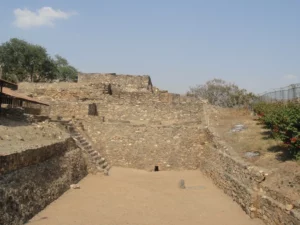
San Miguel Ixtapan
San Miguel Ixtapan is an archaeological site located in the State of Mexico, known for its historical significance and ancient artifacts. The…
-
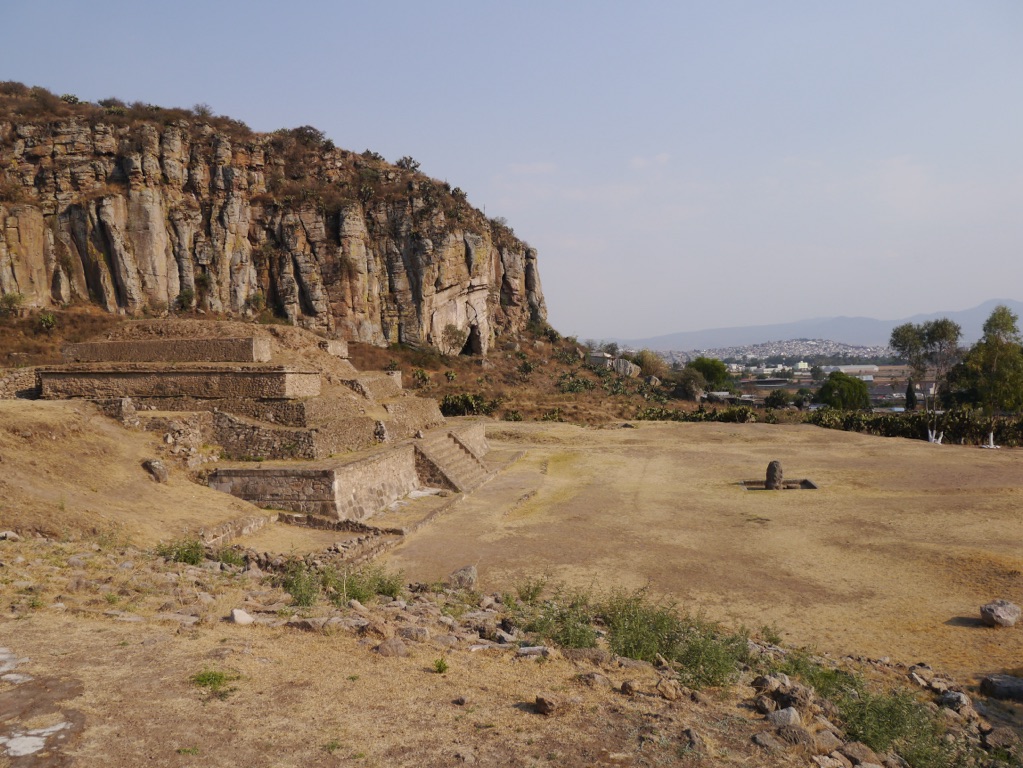
Huapalcalco
Huapalcalco, nestled in the heart of Mexico, stands as a testament to the region’s ancient civilizations. This pre-Columbian site bears the marks…
-
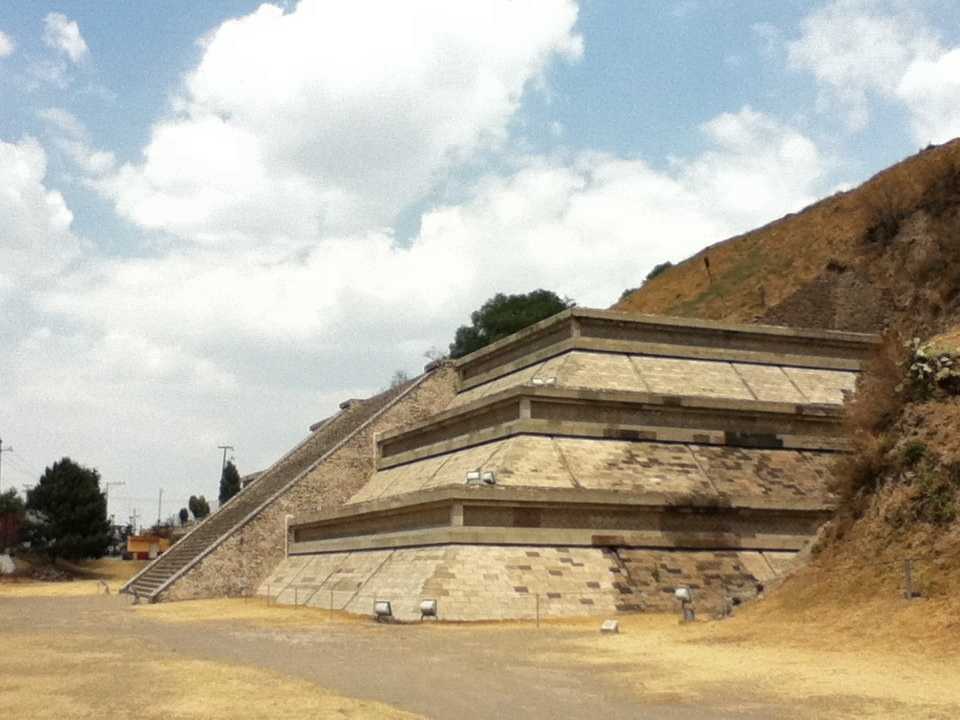 Chichimeca people, Historical Places, Monumental Structures, Pyramids, Teotihuacan civilization, The Aztec Empire
The Great Pyramid of Cholula (Tlachihualtepetl)
Located in the Mexican state of Puebla, the Great Pyramid of Cholula, also known as Tlachihualtepetl (Nahuatl for “made-by-hand mountain”), is a…