Teuchitlán culture
The Teuchitlán culture, prevalent from around 300 BCE to 900 CE, was a pre-Columbian society centered in the Tequila Valleys of Jalisco, Mexico. This society is renowned for its distinctive architectural style known as Guachimontones. The Guachimontones are circular stepped pyramids surrounded by circular building complexes. At the heart of these complexes were high conical structures, believed to be used for ceremonial purposes. The Teuchitlán culture is often associated with the tradition of shaft tombs—a burial ritual where the departed were placed in deep, vertical shafts, accompanied by art objects and offerings.
Agriculturally advanced, the Teuchitlan culture practiced farming with the help of irrigation systems. They cultivated maize, beans, and squash, which were staples of their diet. The society possessed skilled craftsmanship, evident from the elaborate pottery and obsidian tools they left behind. Trade with neighboring cultures allowed for economic prosperity and the exchange of ideas, contributing to the complexity of their societal structure. Although the culture faded into obscurity around 900 CE, today, archaeological sites like Los Guachimontones provide valuable insights into the Teuchitlán people’s way of life and their spiritual beliefs. The society’s unique contributions to architecture, agriculture, and art offer a window into a fascinating chapter of Mesoamerican history.
-
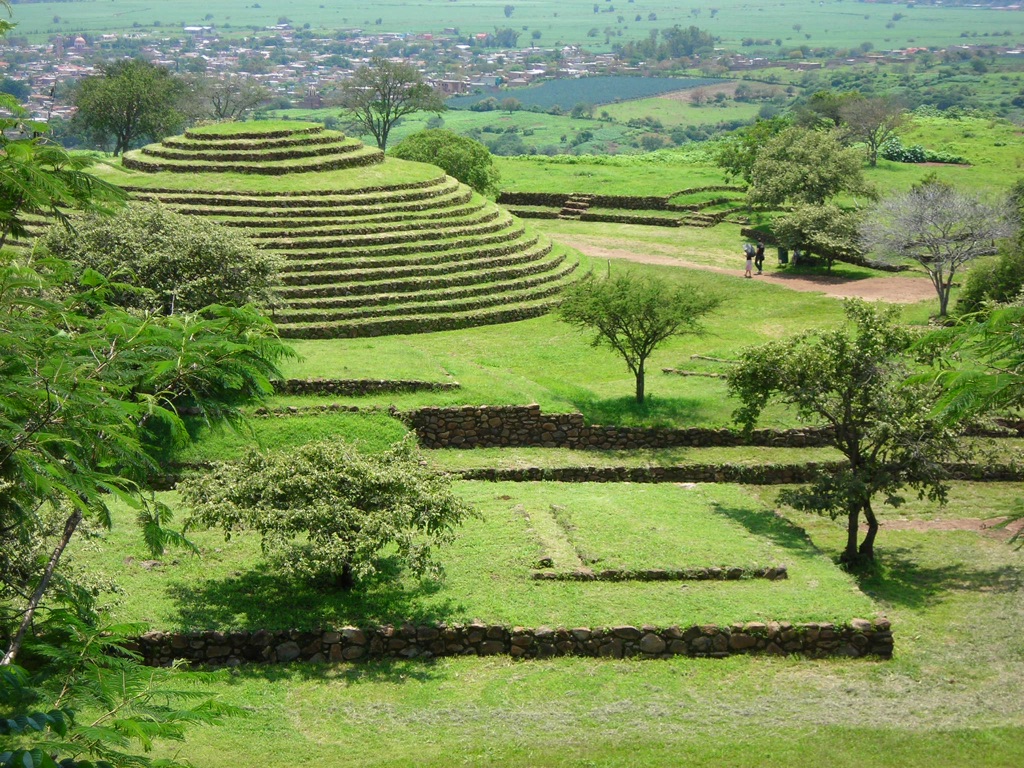
Guachimontones
Guachimontones stands as a testament to the advanced pre-Columbian Teuchitlan tradition. Located in the heart of Jalisco, Mexico, this archaeological wonder captivates…