Muisca Civilization
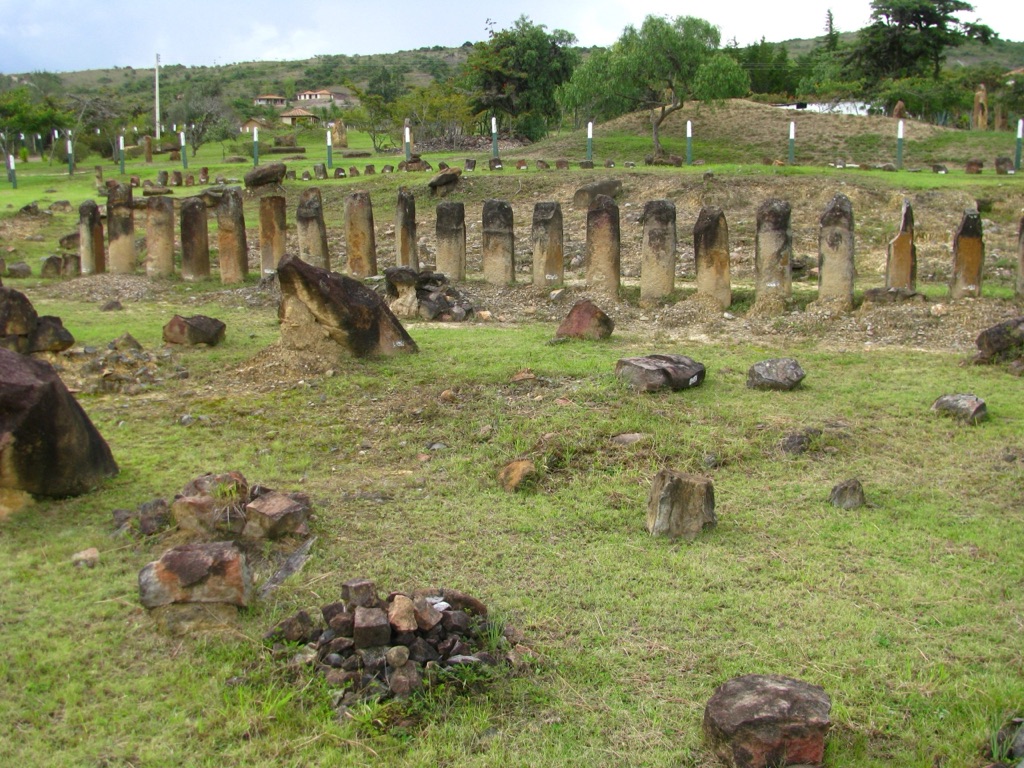
The Muisca Civilization: An Overview
The Muisca, also known as Chibcha, were an indigenous civilization that thrived in the Altiplano Cundiboyacense, Colombia, before the Spanish conquest. This civilization, which spoke Muysccubun, a language of the Chibchan family, was encountered by Spanish conquistadors in 1537. The Muisca Confederation, as it was known, was divided into subgroups primarily aligned with three rulers: the hoa of Hunza, the psihipqua of Muyquytá, and the iraca of Suamox.
Territory and Population
The Muisca territory covered approximately 25,000 km², stretching from the north of Boyacá to the Sumapaz Páramo and from the summits to the western portion of the Eastern Ranges. At the time of the Spanish invasion, the population was estimated to be between 500,000 to over 3 million inhabitants. Their economy was diverse, focusing on agriculture, salt mining, trading, metalworking, and manufacturing. Today, the Muisca population has significantly decreased due to Spanish colonization, with descendants primarily found in rural municipalities.
Historical Background
Evidence of human activity in the Altiplano Cundiboyacense dates back to the Archaic stage at the beginning of the Holocene era, with significant sites like El Abra, dating to around 13,000 years ago. The Muisca era began with migrations to the highlands during the Formative era, transitioning from hunter-gatherers to sedentary farmers. By 1500 BCE, agrarian groups with ceramic traditions had established permanent settlements in the region.
Political and Administrative Organization
The Muisca Confederation was a loose union of states, each retaining sovereignty. It was neither a kingdom nor an empire but a well-organized confederation of tribes. The confederation was divided into the southern confederation, headed by the zipa with its capital at Bacatá (now Bogotá), and the northern territory ruled by the zaque with its capital in Hunza (now Tunja). The Muisca legislation was consuetudinary, with natural resources considered common goods.
Language and Economy
The Muisca spoke Chibcha, which facilitated trade with related cultures. Their economy was robust, with emeralds, copper, coal, salt, and gold being the primary products. The Muisca were skilled in agriculture, using terrace farming and irrigation, and were adept weavers, producing complex textiles.
Culture and Religion
The Muisca culture was agrarian and ceramic, with a strong political and administrative organization. Their religion centered on the Sun god, Sué, and the Moon goddess, Chía, with a developed calendar and knowledge of astronomical events. The Muisca also had a rich mythology and practiced sports like turmequé, which has survived as a popular sport in Colombia.
Spanish Conquest
The Spanish conquest exploited rivalries within the Muisca Confederation, leading to the eventual downfall of the civilization. The last Muisca sovereigns were executed in the early 1540s, and the territories were divided among the conquistadors. The Muisca structure was dismantled, and the territory became part of the colonial region named Nuevo Reino de Granada.
Post-Conquest and Modern Era
Following independence in 1810, many indigenous reservations were dissolved, and the Muisca culture faced suppression. However, since 1989, there has been a process of reconstructing indigenous councils, with efforts towards cultural and linguistic recuperation. Today, the Muisca people continue to strive for the recognition of their rights and the preservation of their heritage.
The Muisca civilization, with its rich history, complex social structure, and advanced economic systems, remains a significant part of Colombia’s cultural identity. Despite the challenges faced over centuries, the legacy of the Muisca people endures, contributing to the diverse tapestry of South American history.
-
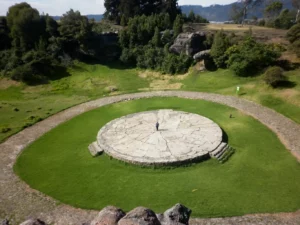
Piedras del Tunjo Archaeological Park
Piedras del Tunjo: A Glimpse into Ancient Colombian Culture Piedras del Tunjo, or “Tunjo Rocks,” is an important archaeological park located 40…
-
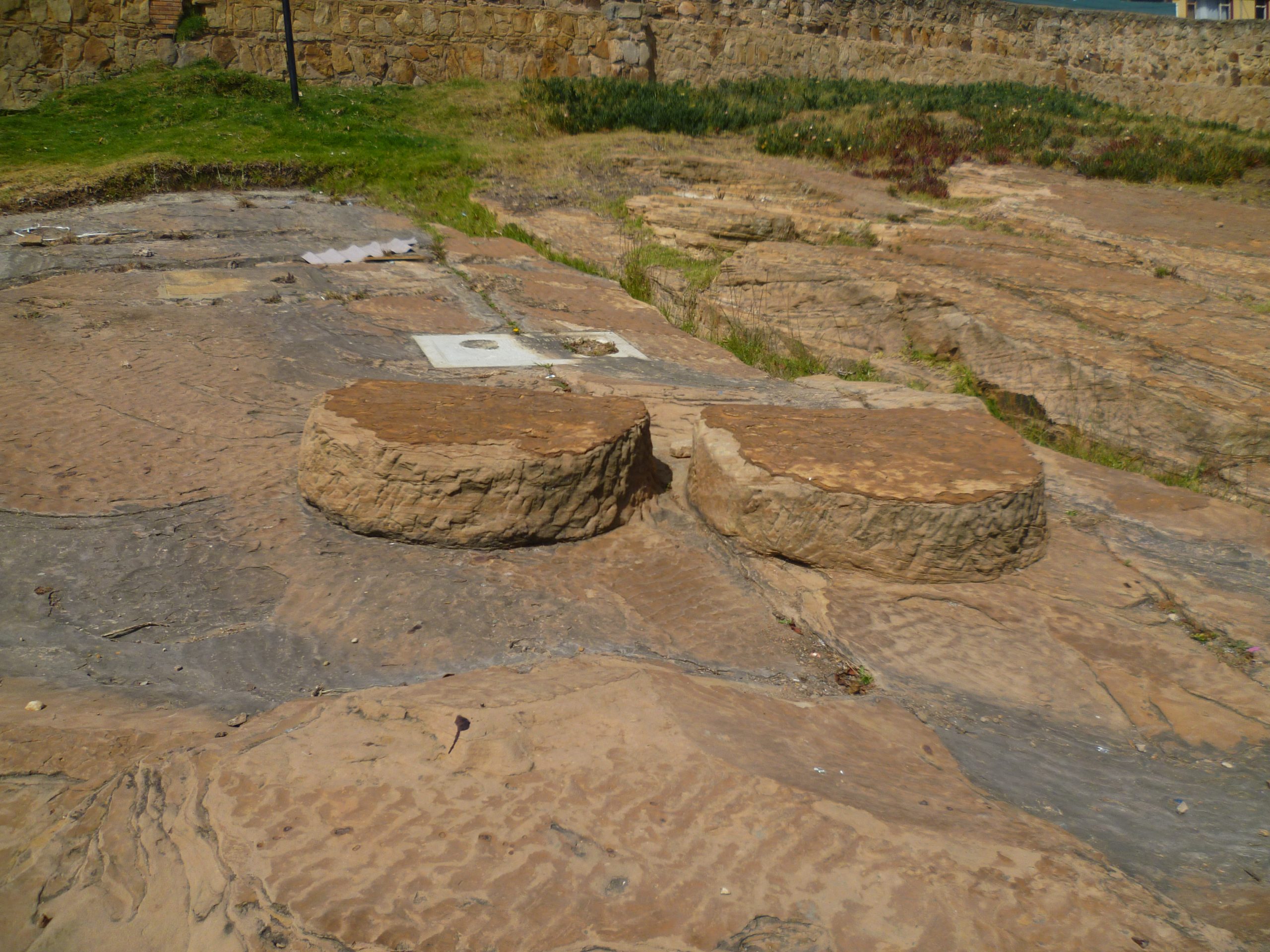
Cojines del Zaque
The Cojines del Zaque are a set of ancient stone seats located in Tunja, Colombia. These seats are significant for their historical…
-
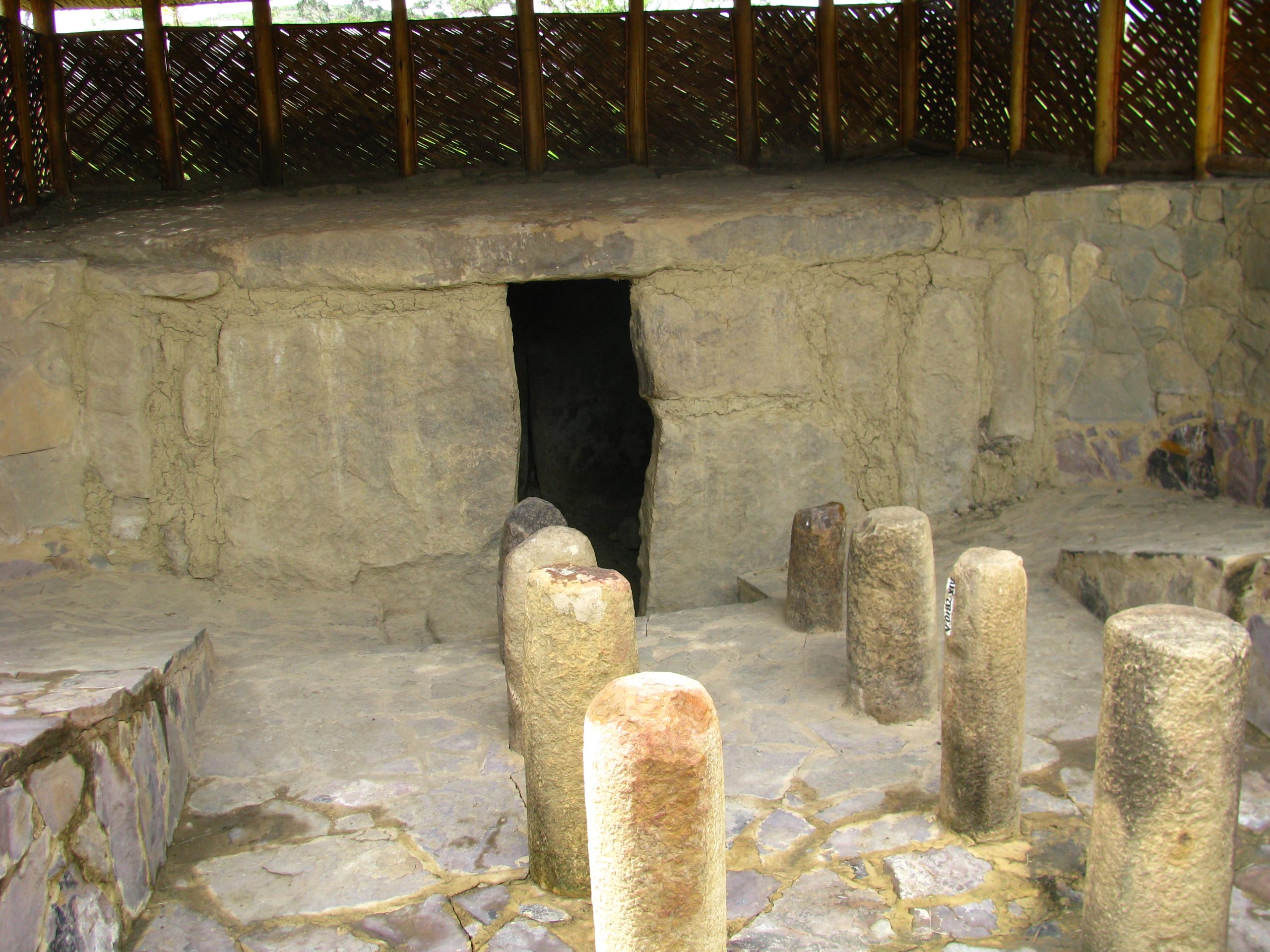
El Infiernito
El Infiernito, also known as the Archaeological Park of Monquirá, is a pre-Columbian archaeological site in Colombia. It is famous for its…
-
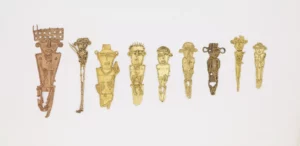
The Tunjo Figurines
The Muisca people, an indigenous civilization that thrived in the Altiplano Cundiboyacense region of modern-day Colombia, have left behind a remarkable legacy…